🚀 10 Things Founders Should Know Before Signing
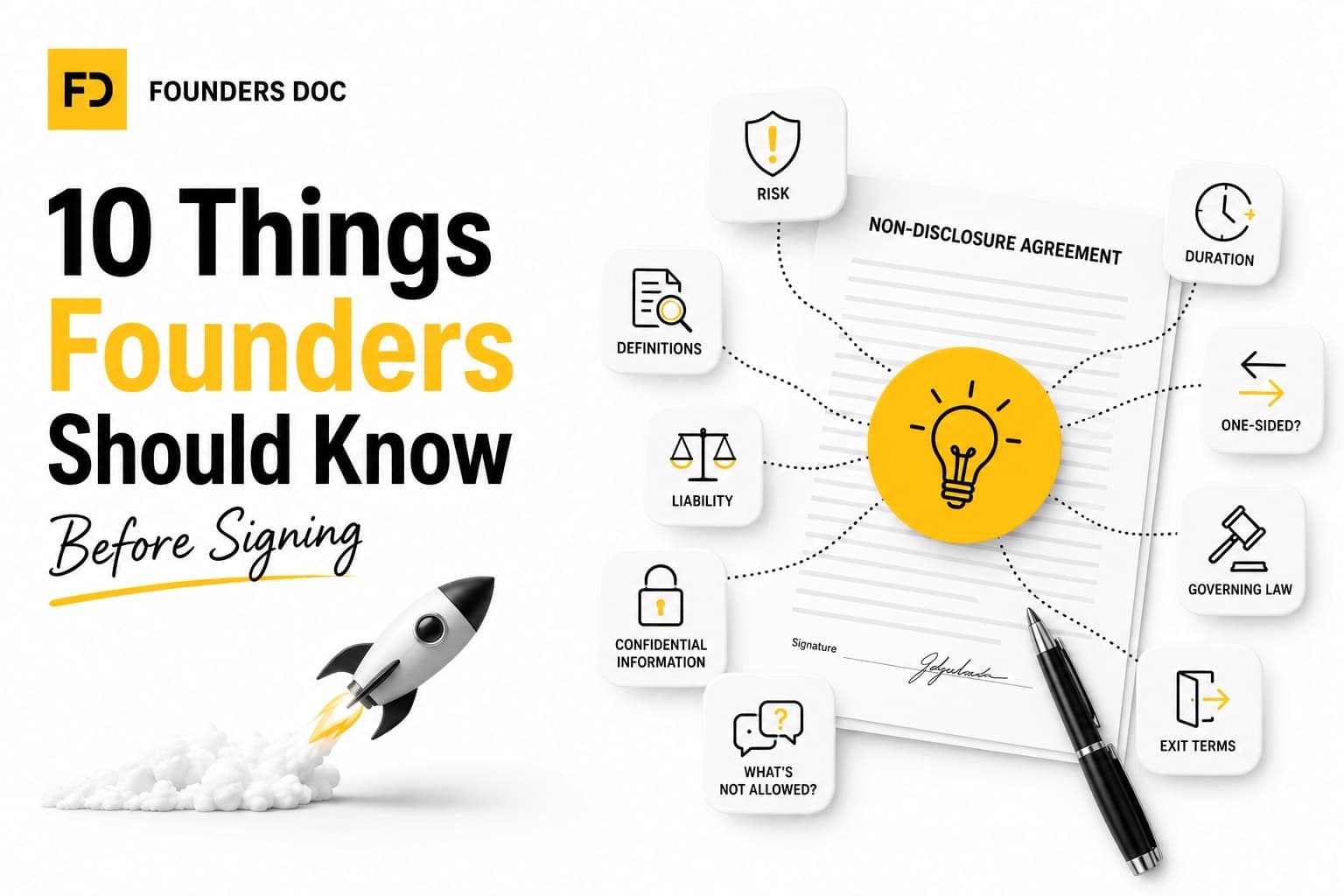
Signing your first commercial contract is exciting. It means someone's willing to pay for what you've built. But contracts are also where startups get themselves into trouble, and it's usually the dense clauses nobody reads carefully that cause it.
This guide walks through what to check before you sign, so your deals help the business grow rather than hold it back.
🚨 The problem: contracts feel like formalities
Most founders rush their first commercial contracts. When you're trying to close fast, contracts get skimmed. Terms that look harmless at signing tend to look very different once the company has scaled into them.
Running every contract past a lawyer isn't a fix either. It's too slow and too expensive when you've got deals landing weekly. But commercial contracts bind both sides. The wrong clause can leave you with:
- Damages you didn't see coming
- A client you can't walk away from
- IP that no longer belongs to you
Most of this is avoidable. A handful of clauses cause most of the trouble, and once you know which ones to check for, they're not hard to spot.
🔍 Understand what you're actually agreeing to
Three questions are worth working through before you sign:
- What must you deliver, and by when? If the deliverables are vague, you're going to argue about them later.
- What happens if you can't deliver? Without a cure period, one missed deadline lets the other side walk away.
- What are you liable for if things go wrong? With no cap on liability, you could be on the hook for anything. Indemnity clauses are often the bigger risk.
Most contracts feel fine until something goes wrong. By then it's too late to renegotiate the wording.
📈 Test every term against your future business
A clause that works at your current size might not work in 12 months. Three areas worth stress-testing:
- Payment terms. A 30-day payment term feels fine with one customer. With 50 customers, it's a cash flow problem. If you're invoicing $50,000 a month and everyone pays on day 60, you're funding two months of operations from your own balance sheet.
- Liability caps. Unlimited liability might look harmless on a small deal. But that small deal often becomes the template for every contract after it. One claim can leave you with more exposure than the business can absorb.
- Volume commitments. Minimum order quantities or exclusivity terms might seem reasonable when you're early. The problem is what they look like later, when you've found a better supplier or a bigger customer and you can't move.
When reviewing any term, ask whether it still works if the business is ten times bigger. If it doesn't, push back before you sign.
🚪 Know how you get out before you sign
Termination is the section most founders skim. Read it carefully before signing. By the time you want to leave, your options are whatever the contract says. Check the following:
- Notice period to terminate. Some contracts require 90 or 180 days.
- Termination for convenience, or only for cause.
- Obligations that continue after the contract ends, including confidentiality, IP assignment, and any non-compete clauses.
Some contracts are nearly impossible to exit. A 3-year term with only "for cause" termination keeps you in the relationship unless the other side materially breaches. That can be a long time if the partnership isn't working.
🔁 Auto-renewal
Many founders discover they're locked in for another year because they missed a 30-day notice window buried in page 12. If termination is hard, make sure renewal is optional, and put the notice deadline in your calendar the day you sign.
📜 Check who owns what you create
Default IP terms decide who owns the work you create for clients. Get this wrong and you can end up handing over rights that should have stayed with you. If you're building something for a client (software, designs, code, written content), check the contract for:
- Ownership: do you keep it, or does the client? "Work for hire" clauses transfer everything to the client.
- Reuse rights: can you use the work for other clients? If not, you're building something that only ever serves one customer.
- Modification and resale: can the client modify or resell what you've built?
A common solution is a licence-back arrangement. You assign the IP to the client but keep the right to use the underlying work (excluding their confidential data) for other projects. This is standard practice and worth asking for.
⏰ Don't let urgency override judgement
Counterparties often create pressure to sign quickly: "we need this signed by Friday", or "this is our standard contract, we never change it". These are negotiation tactics. Standard contracts protect whoever drafted them, and most clauses are negotiable if you ask.
Common pressure tactics to watch for:
- Artificial deadlines like "the price goes up Monday"
- "Everyone signs this" framing
- Refusing redlines because "legal won't approve changes"
If someone won't give you time to read a contract properly, take that as a signal. A legitimate counterparty will give you reasonable time to review.
🪤 Liability and indemnity
Liability clauses decide what you might owe if something goes wrong. Indemnity clauses decide when you have to cover the other side's losses. Both can be significant for a startup.
- Liability caps. Always negotiate a cap. The standard approach is to limit liability to the fees paid under the contract, often over the preceding 12 months. Uncapped liability is rarely acceptable.
- Carve-outs. Watch for carve-outs that remove the cap for certain claims. IP infringement and data breaches are common ones. Either can expose you to unlimited liability even when the headline cap looks reasonable.
- Mutual vs one-sided indemnities. A mutual indemnity protects both parties and is reasonable. A one-sided indemnity puts all the risk on you and is worth challenging.
- Insurance requirements. If the contract requires specific cover — like professional indemnity or cyber liability — check you can actually get it. Factor the cost into your pricing.
🏢 Check what happens if you get acquired
Many commercial contracts can be terminated if you're acquired or restructure. This matters more than founders realise. If a contract terminates the moment you're acquired, you lose that revenue exactly when a buyer is valuing it. Look for:
- Change of control clauses. Some let the other side terminate if your ownership changes. Others require their consent to the new owner.
- Anti-assignment clauses. These stop you from transferring the contract to a new entity. If you're acquired, the buyer needs the counterparty's approval, and that approval can be refused or used as a chance to renegotiate.
- What "change of control" actually means. Definitions vary. A sale of more than 50% of shares is common, but some clauses trigger at 25% or even on changes in senior management.
If you're a startup that might be acquired or raise a large round, push to remove change of control rights, or limit them to direct competitors only. You don't want a customer's consent process holding up your acquisition or financing.
✅ Commercial contract review checklist
Before signing any commercial contract, work through these questions:
| Area | Questions to ask |
|---|---|
| 📦 Scope and deliverables | Are deliverables clearly defined? Is there a process for handling scope changes? What are the acceptance criteria? |
| 💸 Financial terms | What are the payment terms? Are there penalties for late payment? What happens if pricing needs to change? |
| ⚠️ Liability and risk | Is liability capped? Are there carve-outs you should know about? What insurance is required? |
| 💡 IP and ownership | Who owns work product created under the contract? Do you keep any usage rights? Are there restrictions on similar work for other clients? |
| 🔁 Term and termination | How long is the initial term? What are the termination provisions? Is there auto-renewal, and what's the notice period? |
| 🏢 Change of control | Can the other side terminate if you're acquired? Is there an anti-assignment clause? How is "change of control" defined? |
| ⚖️ Dispute resolution | What's the governing law? Is there a mandatory arbitration clause? Where would disputes be heard? |
🎯 Key takeaways
- Read every contract assuming something will go wrong, then check how the contract handles it.
- Test every term against a 10x growth scenario before agreeing.
- Read the termination clause carefully — it can't be changed after signing.
- Default IP clauses usually transfer ownership to the client. Push back if you need to keep usage rights.
- Don't let artificial urgency rush you. Legitimate counterparties give you time to review.
- "Standard" contracts are drafted to protect the side that wrote them.
- Always negotiate a liability cap. Uncapped exposure is a serious risk for a startup.
- Check change of control clauses early. Contracts that terminate on acquisition can erode value when you need it most.
Next time you've got a contract to sign, give FD AI a go. It picks up the same clauses this guide covers and tells you what's worth pushing back on.
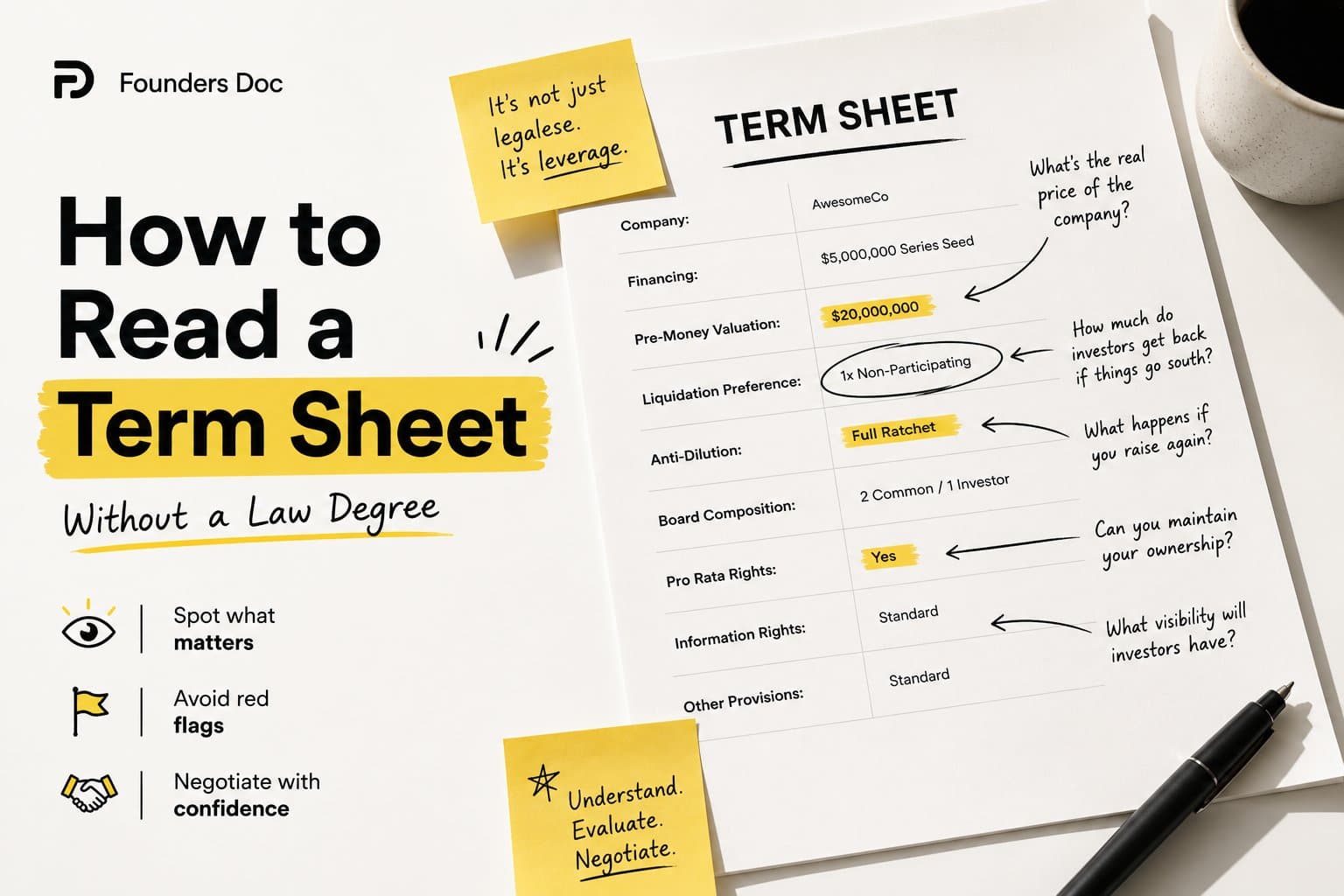
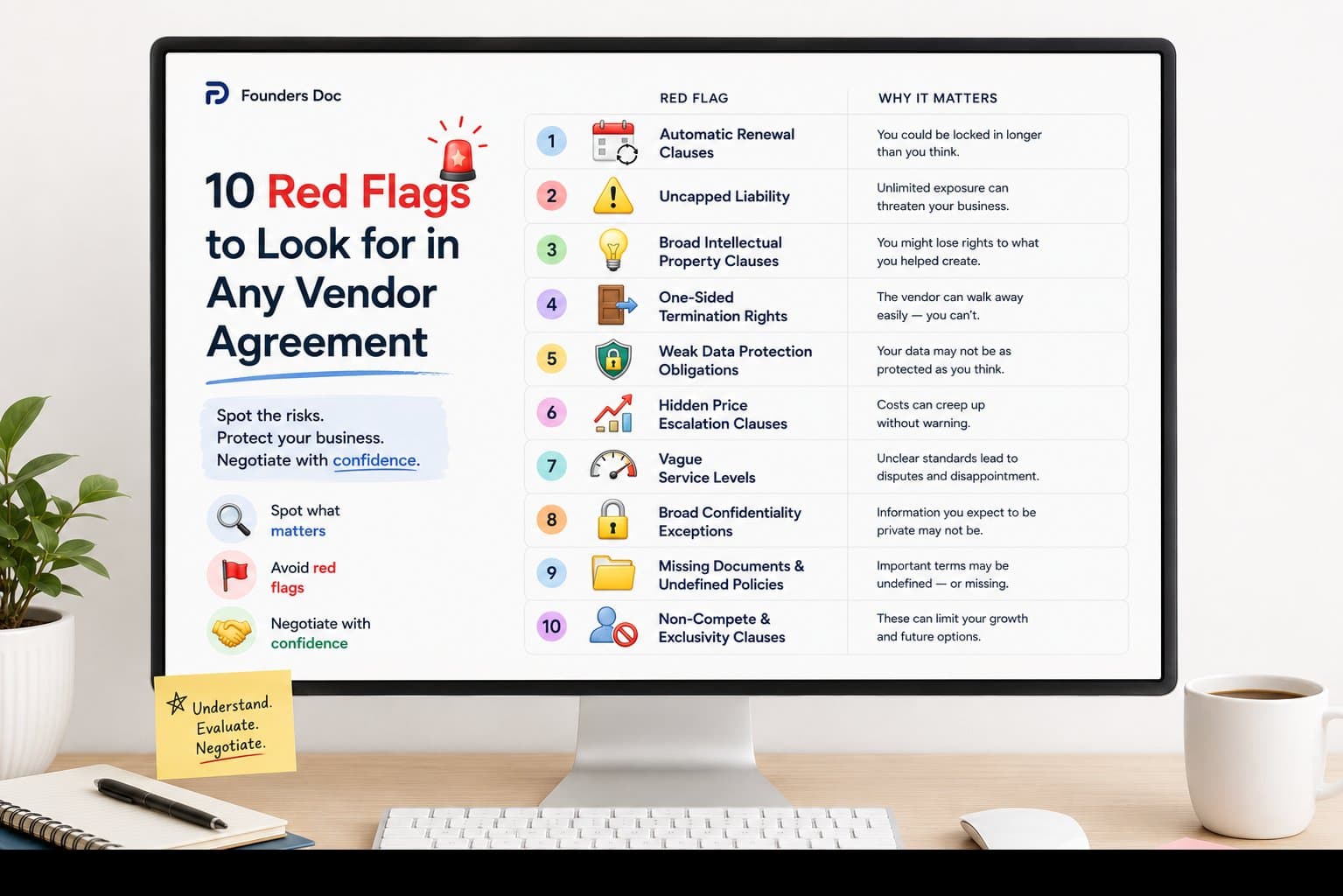
Founder contract reads
More from FD AI
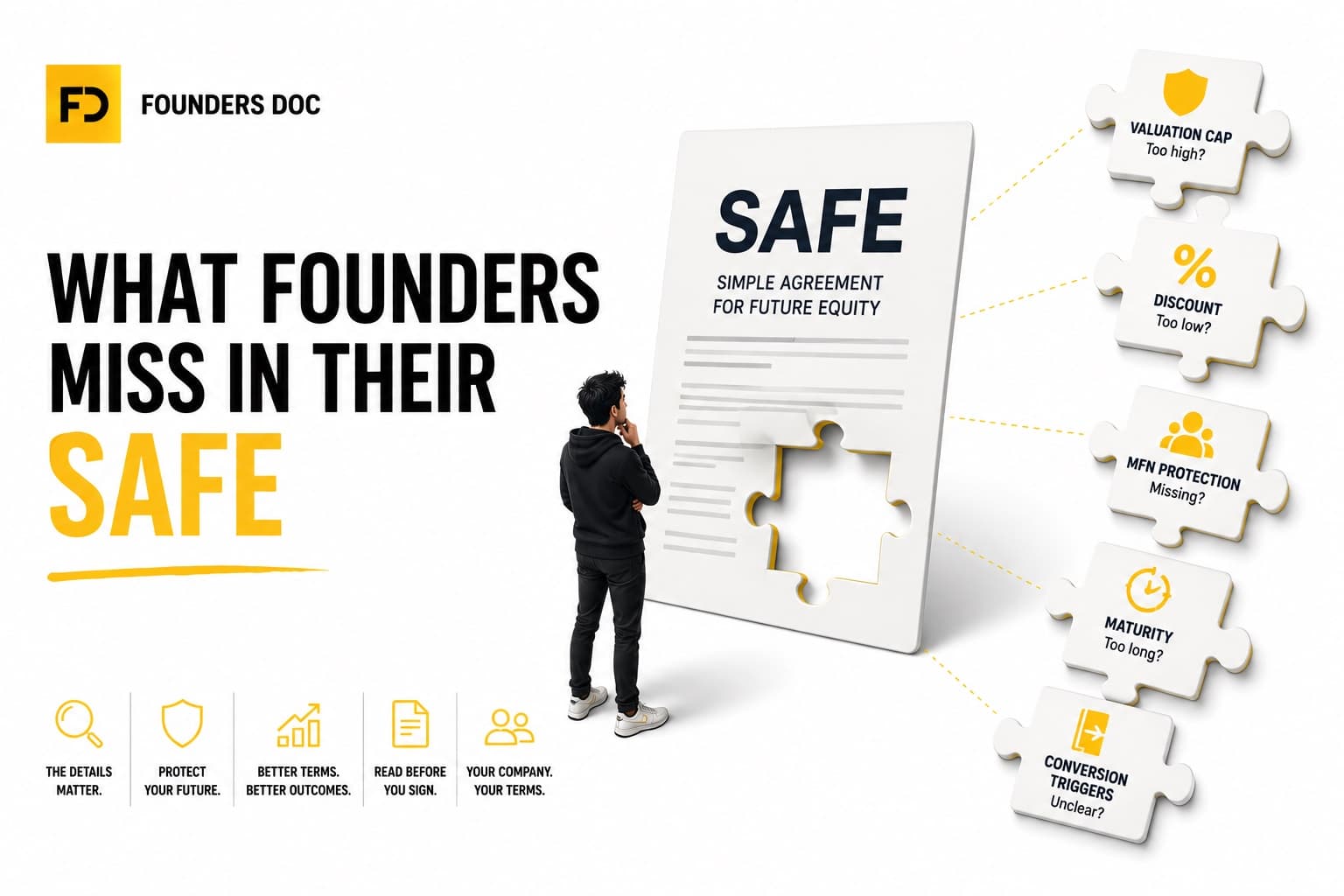
📊 What Founders Miss in their SAFE
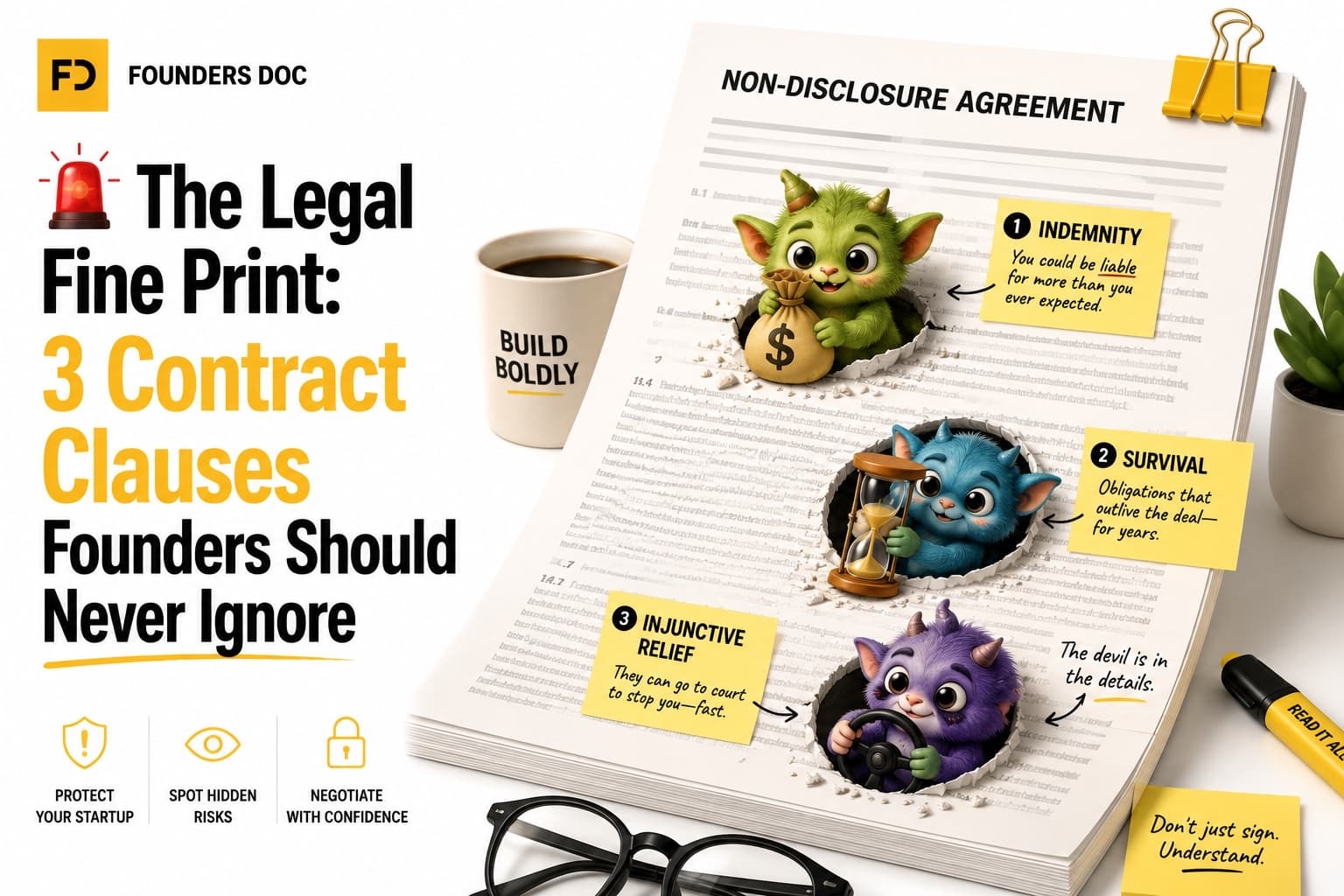
🚨 The Legal Fine Print: 3 Contract Clauses Founders Should Never Ignore
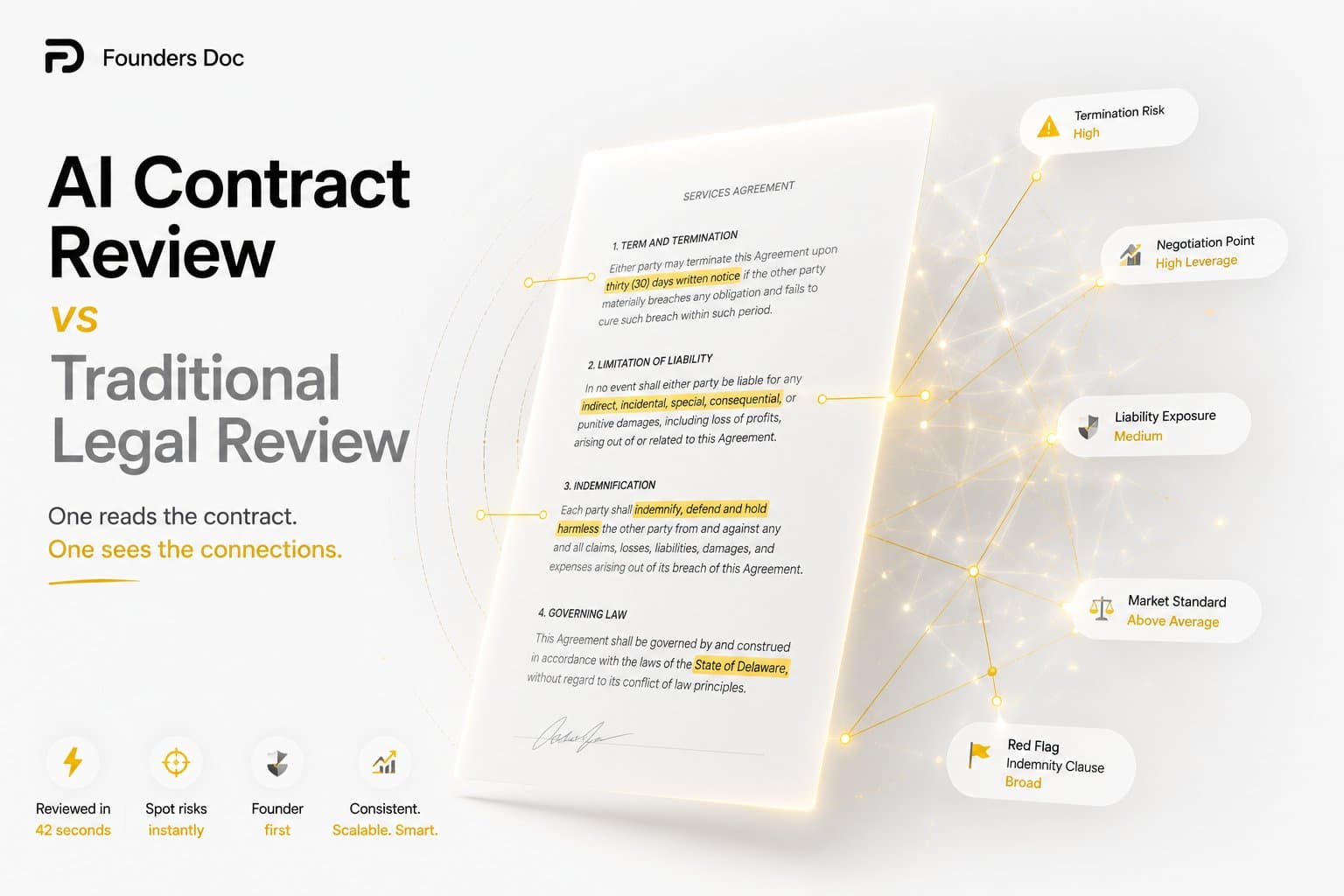
⚖️ AI Contract Review vs Traditional Legal Review: What's the Difference?
Review your next contract with Jessica.
Know what you’re signing — in minutes, not hours.