📑 How to Read a Term Sheet Without a Law Degree
A founder's guide to reading a term sheet — what valuation, board control, liquidation preferences, anti-dilution, vesting, exclusivity and option pools actually mean before you sign.
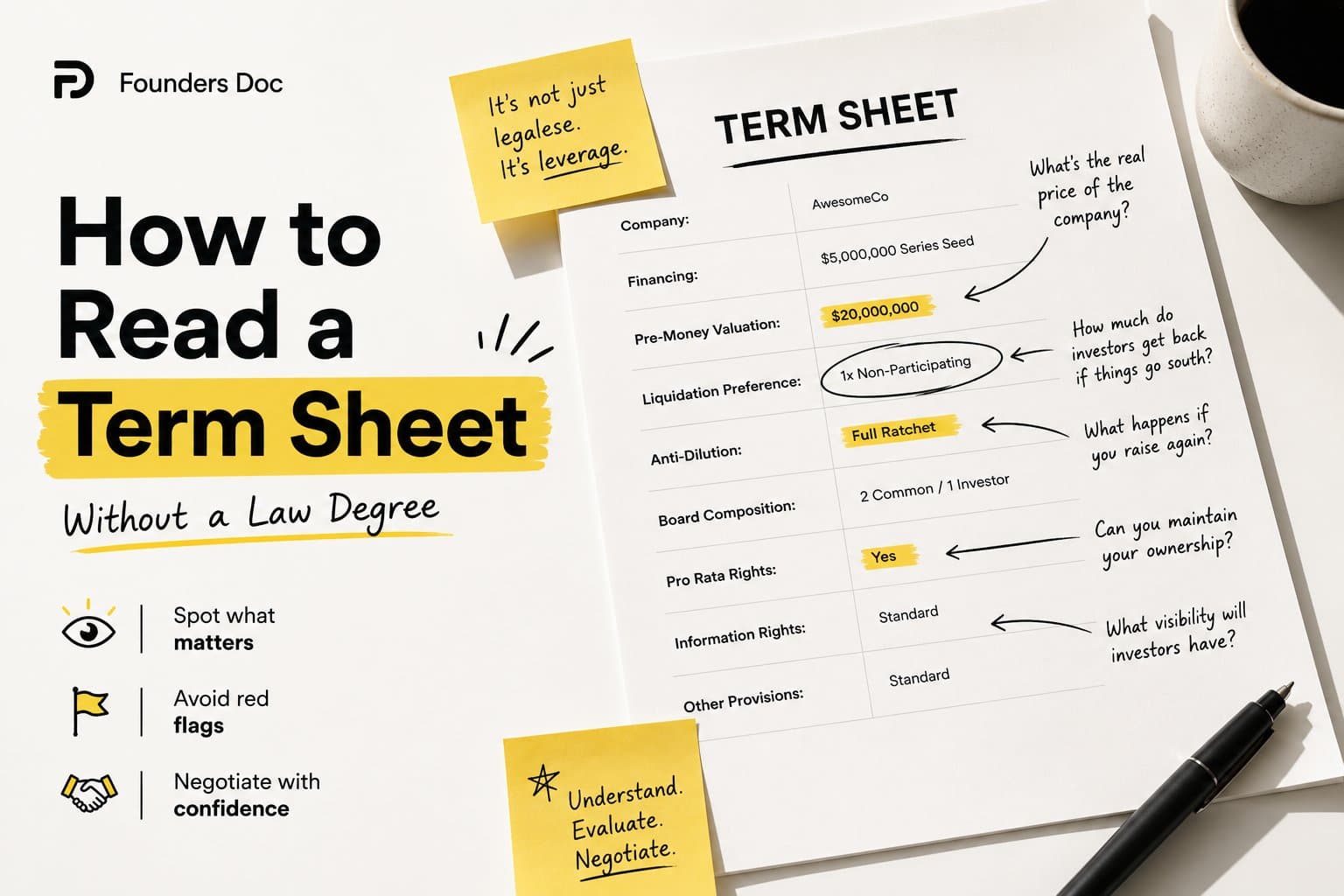
Most founders do not see a term sheet until money is finally on the table. That sounds exciting until you open the PDF and realise it reads like a mix of finance jargon, legal language, and subtle ways to lose control of your company.
The problem is not that term sheets are impossible to understand. The problem is that founders focus on the valuation headline and miss the clauses that actually shape the deal later.
A “good” valuation can still hide:
| 🚩 What looks fine | ⚠️ What’s actually happening |
|---|---|
| Strong headline number | Investor veto rights baked into the structure |
| Reasonable percentage | Board control tilted to the investor side |
| Standard preference rights | Aggressive liquidation preferences that change exit economics |
| Standard transfer terms | Restrictions that make future fundraising harder |
You do not need a law degree to spot these. You just need to know where to look first.
This guide breaks down the clauses that matter most in a startup term sheet, what they mean in practice, and what you should actually care about before signing.
🚀 First Things First: What Is a Term Sheet?
A term sheet is the commercial roadmap for an investment deal. It sets out the key business terms before the long-form legal documents get drafted.
Think of it as the “deal summary” that later becomes:
| Document | Role |
|---|---|
| Share Subscription Agreement | Terms on which the shares are issued and paid for |
| Shareholders’ Agreement | Ongoing rights, governance, and obligations |
| Updated Company Constitution | Legal foundation of the company itself |
👀 The Biggest Mistake Founders Make
Most first-time founders only look at valuation and how much they are raising. Everything else gets skimmed.
That is usually the wrong approach.
A slightly lower valuation with balanced governance rights is often better than a flashy valuation tied to heavy investor control.
The terms founders skim show up later — usually at the worst time:
| ❌ What founders agree to | 💥 Where it actually hits |
|---|---|
| Kitchen-sink of Investor reserved matters | Founders do not have the operational freedom to scale and grow, as every micro-/macro- change requires investor approval |
| Mandatory founder lock-ins | Inability for a co-Founder to leave on reasonable terms due to changes in personal circumstances |
| Board structures founders cannot control | Inability to control future fundraising rounds, key growth decisions and business plans |
| Liquidation waterfalls favouring investors | Startup exits — but the Founders get no pay-outs after 7 years of hard work |
None of these issues show up in TechCrunch headlines after the round closes. The term sheet is where those dynamics usually begin.
📊 The 7 Clauses You Should Read Carefully
💰 1. Valuation
This is the number founders usually jump to first.
You will typically see:
- Pre-money valuation; and
- Investment amount.
| Item | Amount |
|---|---|
| Pre-money valuation | S$8 million |
| Investment amount | S$2 million |
| Post-money valuation | S$10 million |
In this example, the investor ends up owning 20% post-investment. Simple enough.
But valuation alone does not tell you whether the deal is founder-friendly. A higher valuation can still come with stronger investor control rights, aggressive dilution protection, or expensive liquidation preferences.
You should read valuation together with the rest of the term sheet, not in isolation.
🪑 2. Board Seats and Control Rights
This clause matters far more than many founders realise. It determines who actually controls major decisions after the investment.
A common structure might look like this:
| Board Composition | Meaning |
|---|---|
| 2 founder directors | Founders appoint 2 seats |
| 1 investor director | Investor appoints 1 seat |
| 1 independent director | Jointly agreed |
That sounds balanced on paper. But the real issue is usually hidden in veto rights, reserved matters, or quorum requirements.
Example: If the term sheet says a board meeting cannot proceed without the investor director present, the investor effectively gets blocking power even with a minority shareholding. This is where founders accidentally give away operational control.
Watch carefully for clauses requiring investor approval for:
| 🔑 Decision type | Why investors ask for it |
|---|---|
| Hiring senior employees | Control over leadership |
| Approving budgets | Control over spending |
| Issuing shares & fundraising | Control over dilution |
| Acquisitions | Control over direction |
| Changing business direction | Control over strategy |
| Taking on debt | Control over balance sheet |
Some investor protections are reasonable. The issue is proportionality. If an investor owns 10% but receives rights that effectively control the company, you should slow down and review the structure properly.
📉 3. Liquidation Preference
This clause affects who gets paid first during an exit. It matters more than founders think because it changes the economics of acquisitions, acqui-hires, and lower-value exits.
Here is a simplified example:
| Scenario | Outcome |
|---|---|
| Investor invests S$2 million | Investor receives preference |
| Company exits for S$5 million | Investor gets paid first |
| Remaining proceeds distributed after | Founders receive balance |
The most founder-friendly structure is usually 1x non-participating liquidation preference. That means the investor either gets their money back, or converts into ordinary shares and takes their percentage upside.
More aggressive versions to watch:
| Type | Founder impact |
|---|---|
| Participating preferences | Investor gets money back and shares the rest |
| Multiple preferences (2x, 3x) | Investor gets 2-3x their money before founders see anything |
| Stacked preferences across rounds | Later investors paid before earlier ones |
Those structures can significantly reduce founder proceeds on exit. This is one of the easiest clauses to skim and regret later.
🛡️ 4. Anti-Dilution Protection
This clause protects investors if the company raises money later at a lower valuation. That future round is commonly called a “down round”.
The two common approaches are:
| Type | Founder Impact |
|---|---|
| Weighted average | Moderate investor protection |
| Full ratchet | Very investor-friendly and highly dilutive to founders |
Full ratchet provisions can dramatically dilute founder ownership if the company hits a difficult period later.
Many early-stage founders agree to these clauses because they assume the company will only grow upward. Markets do not always cooperate with that assumption.
You should understand how dilution works before agreeing to aggressive anti-dilution mechanics.
🔒 5. Founder Vesting and Lock-Ins
Investors usually want founders to remain committed after the investment. That is commercially understandable. The issue is how the restrictions are drafted.
Common founder-related clauses to look out for:
| Clause | What it does |
|---|---|
| Reverse vesting | Your existing shares vest over time, even though you already own them |
| Lock-in periods | You cannot sell or transfer shares for a fixed term |
| Good leaver / bad leaver provisions | Different consequences depending on how you exit |
| Compulsory transfer mechanics | Forces you to sell shares back in certain scenarios |
A founder who leaves early may be forced to sell shares back cheaply, or lose unvested equity entirely. Some founders only discover this after signing.
What to pay attention to:
| Area | What to check |
|---|---|
| Vesting timeline | Is the vesting period reasonable for the stage? |
| Acceleration rights | Do unvested shares accelerate on exit or termination? |
| Resignation consequences | What happens if you resign voluntarily? |
| “Bad leaver” definition | Is the definition narrow or broad? |
A badly drafted bad leaver clause can become very punitive. Some definitions include breach of agreement, misconduct allegations, or resignation without consent — that creates room for disputes later.
🚫 6. Exclusivity and No-Shop Clauses
This section often appears harmless. It usually says the company cannot negotiate with other investors for a fixed period while the current investor conducts diligence. 30 to 90 days exclusivity is fairly common.
The issue is duration and leverage. If exclusivity drags on:
- you lose negotiating momentum;
- alternative investors disappear; and
- the existing investor gains leverage to renegotiate later.
This becomes painful if diligence moves slowly, the investor starts retrading the valuation, or legal negotiations stall.
Things to check before signing:
| ✅ Check | 🚩 Watch for |
|---|---|
| How long exclusivity lasts | Periods over 60-90 days without justification |
| Whether it automatically extends | Auto-extension with no founder consent |
| Investor’s obligations during the period | Investor with no milestone or deadline commitments |
| Milestone & diligence timelines | Open-ended diligence with no clock |
Founders sometimes lock themselves into exclusivity without milestone timelines, diligence deadlines, or any obligation for the investor to actually proceed.
📄 7. Employee Option Pool
This is one of the most misunderstood parts of a term sheet. The investor may ask for an employee option pool to be created before the investment closes. The practical effect is dilution.
| Scenario | Impact |
|---|---|
| 10% option pool created pre-investment | Founders absorb dilution first |
| Option pool created post-investment | Dilution shared more evenly |
This becomes important because the headline valuation may not reflect the true economic dilution founders experience. Many founders only realise this after the cap table is recalculated.
Always ask:
- whether the option pool is pre-money or post-money; and
- what the fully diluted cap table looks like after the round.
🧠 How Investors Usually Read a Term Sheet
Good investors are not only looking at upside. They are also protecting against downside risk. That is why term sheets often include governance protections, information rights, dilution protections, and transfer restrictions.
Those clauses are not automatically “bad”. The real question is whether the overall balance still makes sense for the stage of company, the amount invested, and the investor’s ownership percentage.
A seed investor investing S$250k into a very early startup should not usually receive the same control package as a lead investor deploying millions into a later-stage business. Context matters.
⚠️ Red Flags Founders Should Not Ignore
Here are some practical warning signs worth slowing down for:
| 🚩 Red Flag | Why It Matters |
|---|---|
| Investor veto over day-to-day operations | Can restrict founder autonomy |
| Full ratchet anti-dilution | Heavy founder dilution risk |
| Multiple liquidation preference | Reduces founder exit proceeds |
| Broad bad leaver definition | Creates future dispute risk |
| Investor-controlled board quorum | Gives effective blocking rights |
| Long exclusivity periods | Weakens fundraising leverage |
| Undefined “market standard” language | Creates ambiguity later |
| Missing cap table assumptions | Dilution may be unclear |
Not every red flag means “walk away”. Some are negotiable. Some are commercial trade-offs. The important thing is understanding the practical effect before signing.
🧾 A Simple Founder Checklist Before Signing
Before signing a term sheet, ask yourself:
| Category | Question to ask yourself | |
|---|---|---|
| 1 | 🪑 Control | Who controls the board? Can investors block operational decisions? Are veto rights proportionate? |
| 2 | 💰 Economics | What happens during an exit? How does dilution work? What does the fully diluted cap table look like? |
| 3 | 🔒 Founder Position | Are vesting terms reasonable? What happens if a founder leaves? Are transfer restrictions fair? |
| 4 | ⏱️ Process | How long is exclusivity? What happens if diligence drags on? Is the investor actually committed? |
If you cannot comfortably explain the commercial effect of a clause in plain English, pause and clarify it before signing.
🤝 Do You Always Need a Lawyer?
Not at the first conversation stage. But you should involve counsel before signing the term sheet or agreeing to major commercial points.
A good startup lawyer does more than explain legal wording. Here is what they actually help with:
| What they help with | Why it matters to you |
|---|---|
| Where the real leverage sits | So you know which terms you can actually push back on |
| Which terms are market | So you do not waste capital arguing over standard wording |
| What is commercially aggressive | So you spot terms that look standard but are not |
| What is worth negotiating vs conceding | So you pick the right battles |
Not every issue deserves a fight. Some terms are perfectly acceptable if the economics make sense overall. Others quietly reshape control of the company.
Experienced founders learn this quickly after a few rounds. First-time founders usually learn it the expensive way.
🚀 Final Takeaways
You do not need a law degree to read a term sheet properly. You do need to slow down enough to understand who gets control, who carries downside risk, and what changes if the company hits problems later.
The valuation headline is only one part of the deal. The clauses shaping governance, dilution, exits, and founder flexibility usually matter much more over time.
Before signing, read the control provisions carefully, ask for a clean cap table model, understand the liquidation waterfall, and clarify anything you cannot explain back in simple English. That one extra review session can save months of problems later.
Run your next term sheet through FD AI for a review. It flags the key terms that affect your economics and control, and tells you what’s worth raising with the investor before you sign.
Founder contract reads
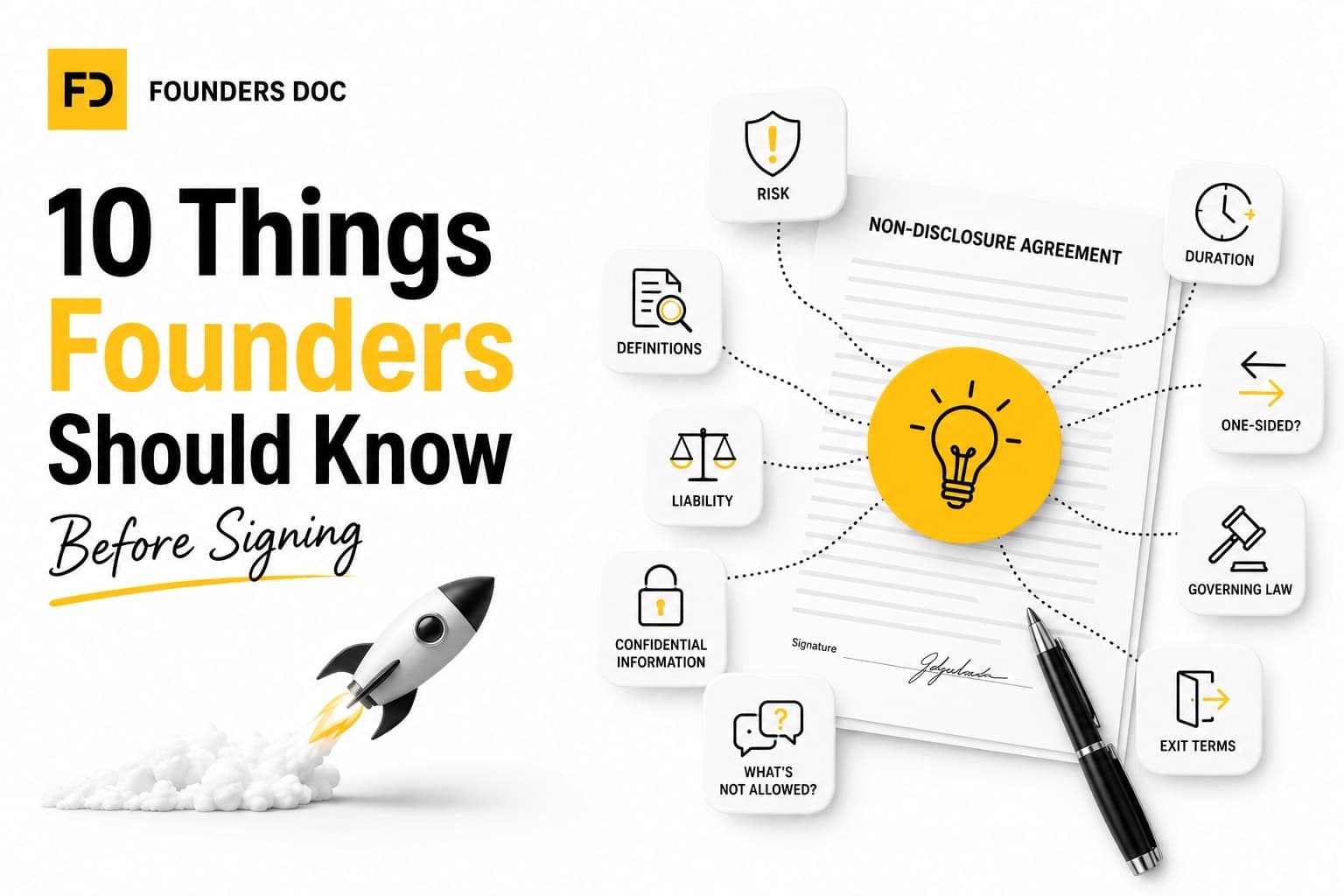
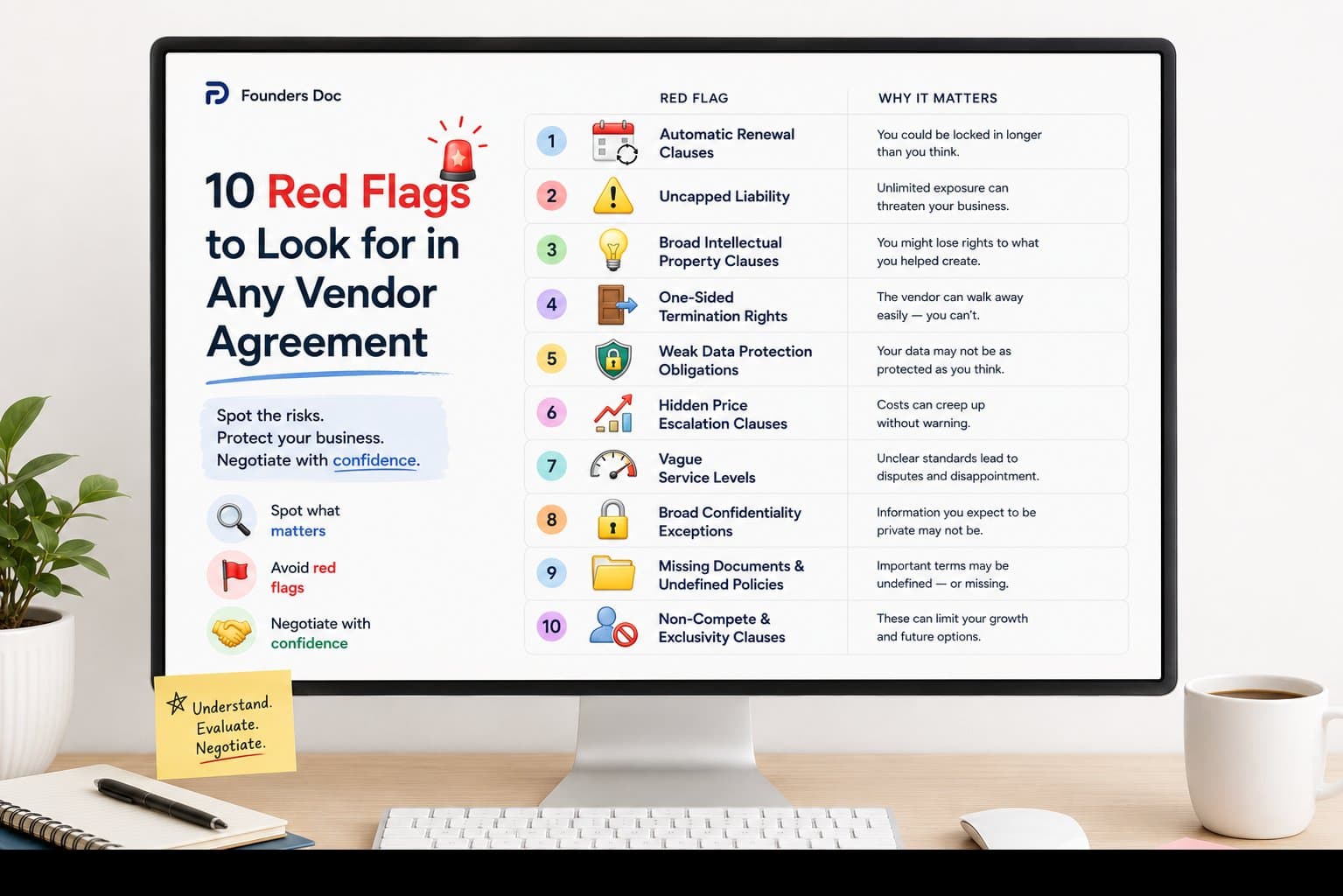
More from FD AI
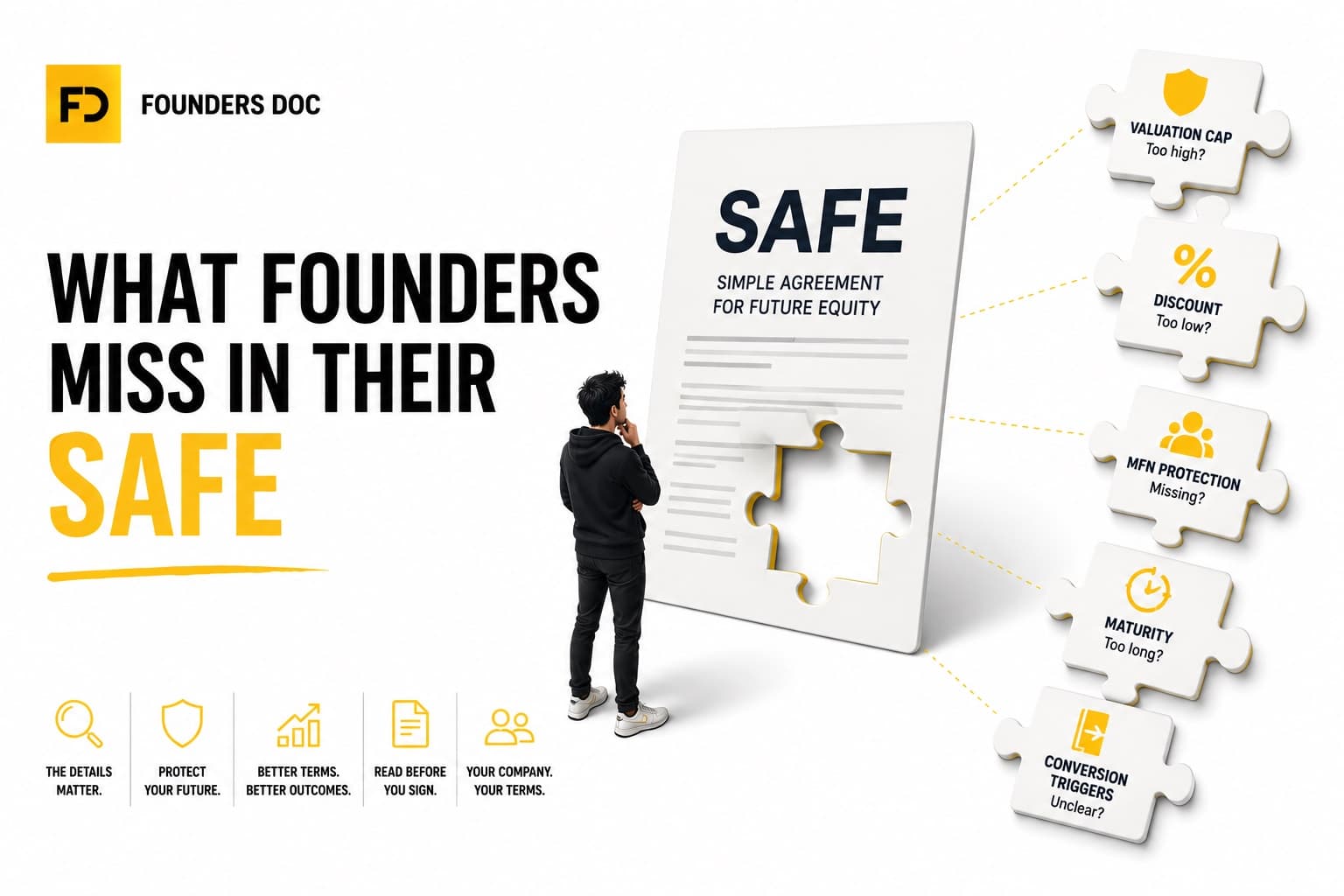
📊 What Founders Miss in their SAFE
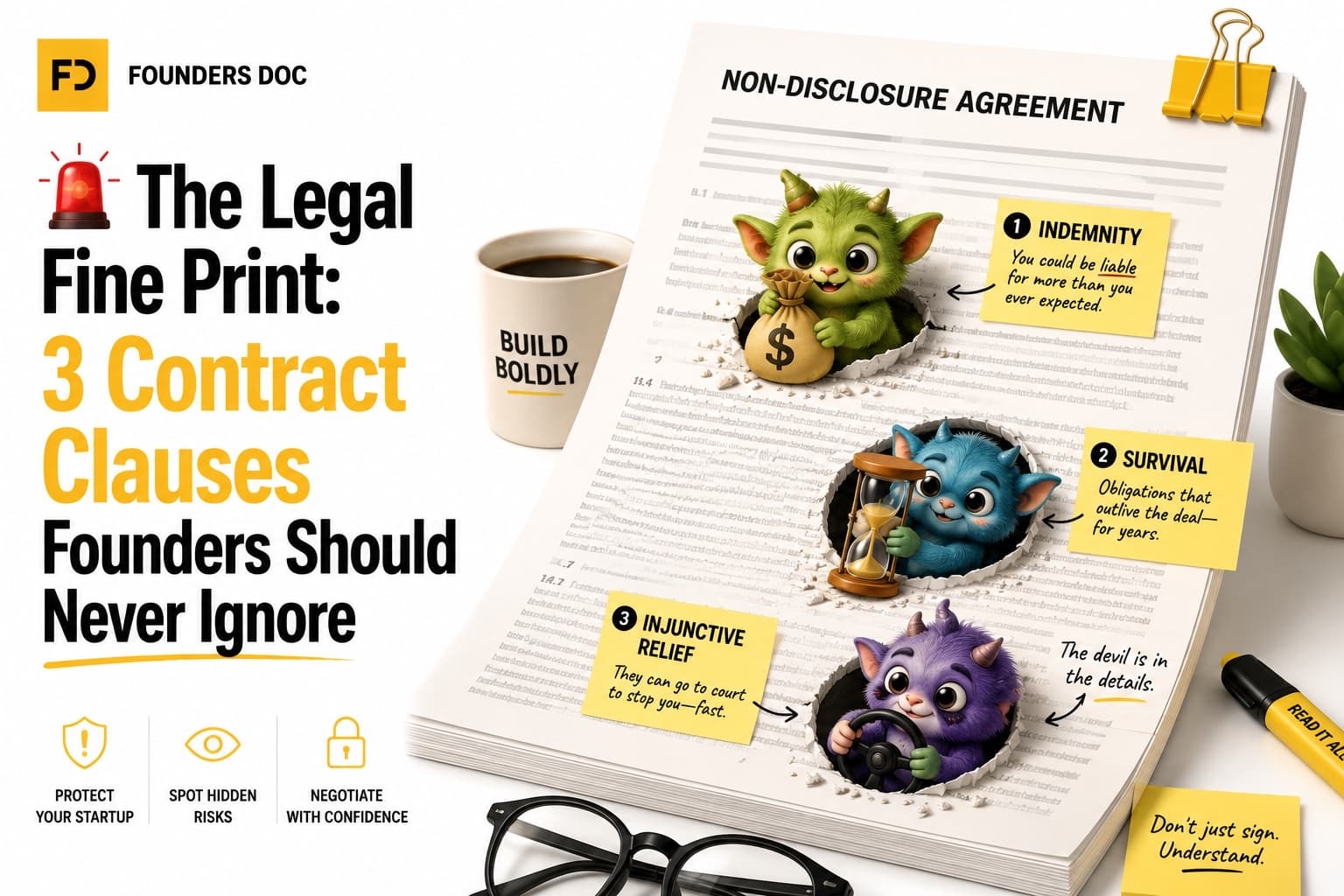
🚨 The Legal Fine Print: 3 Contract Clauses Founders Should Never Ignore
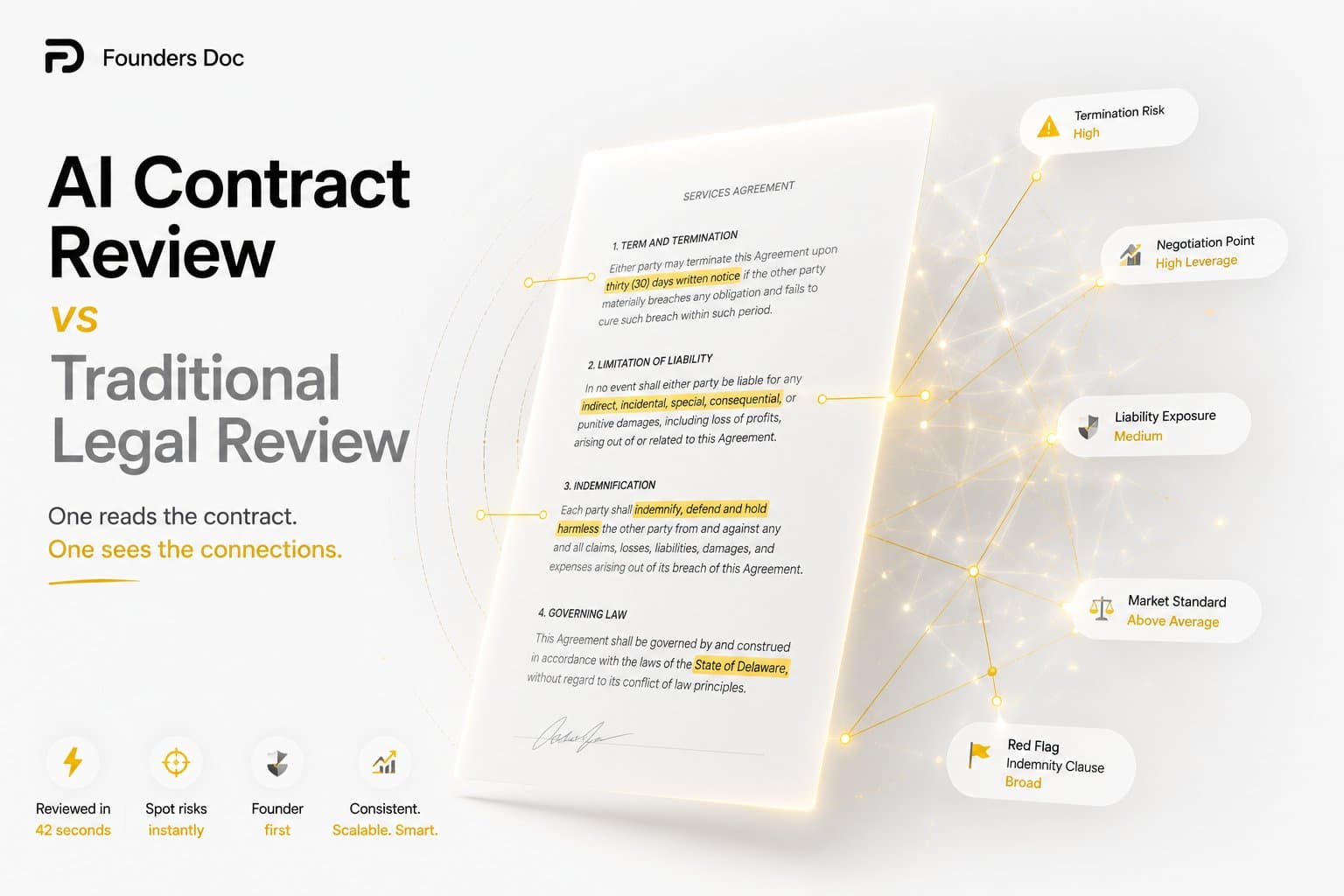
⚖️ AI Contract Review vs Traditional Legal Review: What's the Difference?
Review your next contract with Jessica.
Know what you’re signing — in minutes, not hours.