📊 What Founders Miss in their SAFE
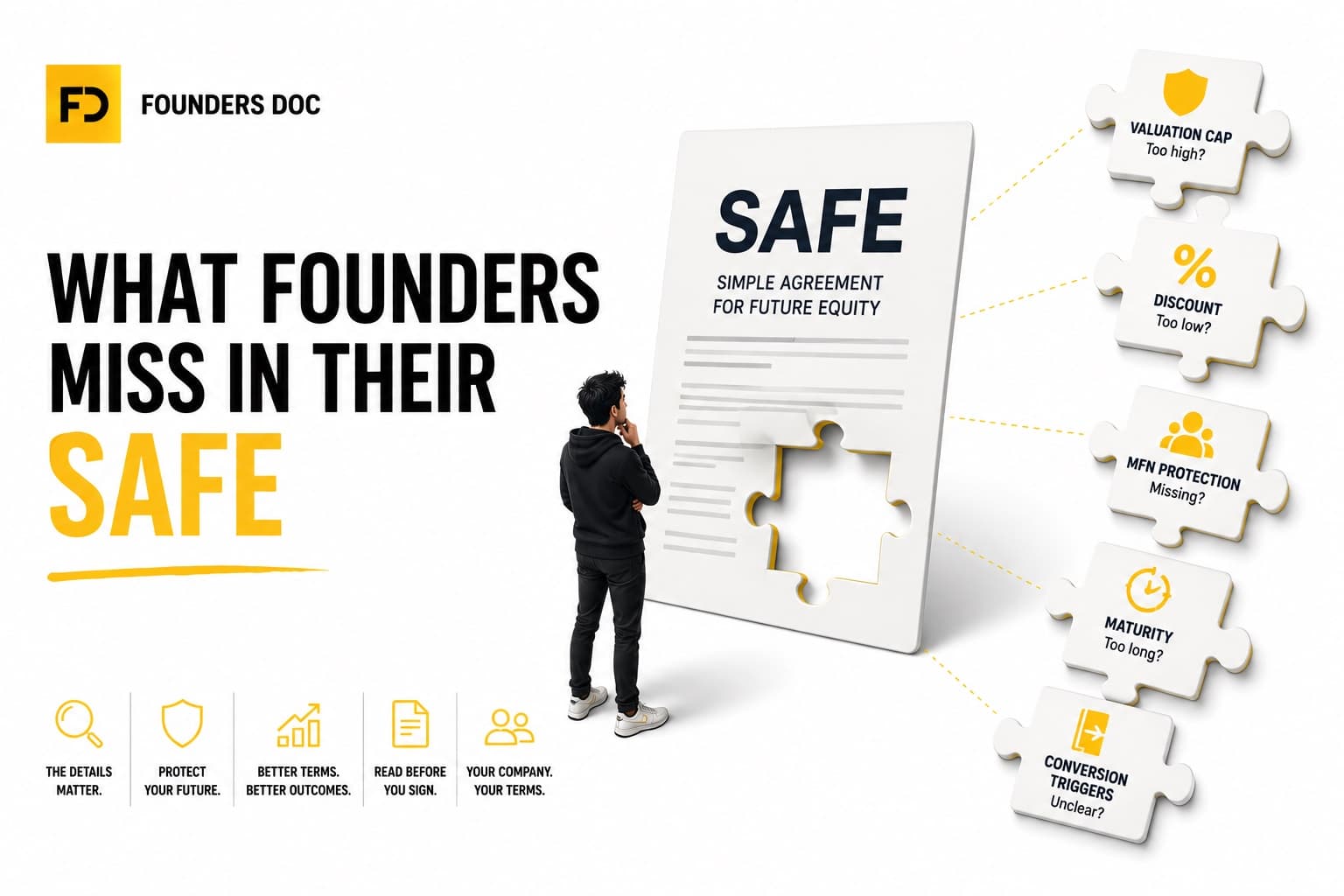
🚀 SAFE Agreements Feel Simple. Sometimes Too Simple.
SAFEs are popular because they feel simple.
They are short, fast to sign, and usually do not require founders to deal with the full legal architecture of a priced equity round. There is no immediate shareholders’ agreement, no immediate cap table change, and no long-form negotiation over investor rights.
That is exactly where the risk sits.
The problem with a SAFE is usually not at signing. The problem appears later, when the SAFE needs to convert.
⏱️ The Signing Is Easy. The Conversion Is Not.
For early-stage founders, a SAFE can feel like clean funding:
- no interest;
- no fixed repayment date;
- no immediate shares issued;
- no shareholders’ agreement; and
- no immediate investor management.
On day one, this feels founder-friendly.
But at the priced round, the company needs to convert those SAFEs into shares. That is when the “simple” document can become a messy cap table and negotiation problem.
⚠️ The Real Issue: Small SAFE Holders Can Create Big Friction
One of the main issues we see when acting for startups is that small SAFE holders can become disproportionately difficult at conversion.
By the time the company reaches a priced round, the founder is usually trying to close a new institutional investment. The lead investor is focused on the new round documents, including the Shareholders’ Agreement.
But if the company has a long list of small SAFE holders, each of them may need to be dealt with before or during conversion.
That creates friction.
Some SAFE holders may raise comments on the Shareholders’ Agreement. Others may ask for side rights, information rights, veto rights, or special treatment. A few may use the timing pressure of the priced round to negotiate terms they would never have received at the SAFE stage.
The commercial problem is simple: a minor SAFE holder can end up slowing down a major financing round.
🧨 The Buy-Out Problem
The messier scenario is where a SAFE holder does not co-operate at all.
Instead of converting cleanly, some holders may stay silent, delay responding, or use the conversion process to ask for a buy-out. We have seen investors use this moment to ask for 1.5x or 2x return terms simply to exit the cap table.
From the founder’s perspective, this is frustrating because the company is not trying to renegotiate the SAFE. It is trying to close the next round.
But from the investor’s perspective, the conversion moment gives them leverage. The company needs a clean cap table. The new investor wants certainty. The founder wants the round closed quickly.
That timing pressure can turn a small SAFE cheque into a large practical headache.
🧩 The Missing Term: Syndication
A standard SAFE does not usually solve this properly.
In particular, it does not always contain clear syndication mechanics. This matters where a company has multiple small SAFE holders.
Structurally, it is often much cleaner for small SAFE holders to be syndicated or aggregated into one vehicle, nominee, representative, or decision-making structure. This reduces the number of individual investors who need to be managed during the priced round.
Without this, the company may be forced to deal with every SAFE holder separately.
That means:
- more signatures;
- more comments;
- more negotiation points;
- more investor management; and
- more execution risk at the priced round.
For founders, this can become a serious distraction at exactly the wrong time.
📑 The SHA Bottleneck
The priced round is where everything becomes real.
At that stage, the company is not just calculating conversion shares. It is also negotiating the new Shareholders’ Agreement.
This is where small, un-syndicated SAFE holders can create problems. They may ask why they are not getting certain rights. They may object to drag-along, tag-along, transfer, reserved matter, or information rights provisions. They may try to negotiate as though they are the lead investor, even though their original cheque size was small.
This can frustrate the new investor and delay closing.
The issue is not that SAFE holders are wrong to protect their position. The issue is that the company should not leave this management problem until the priced round.
🚩 What Founders Should Check Before Signing SAFEs
Before signing multiple SAFEs, founders should check:
| S/N | Point | Why it matters |
|---|---|---|
| 1 | Conversion mechanics | Determines how and when the SAFE becomes shares. |
| 2 | Investor consent requirements | Prevents small holders from blocking later steps. |
| 3 | Syndication rights | Allows small holders to be grouped cleanly. |
| 4 | SHA accession mechanics | Ensures holders sign or are bound by the future SHA. |
| 5 | Buy-out rights | Avoids surprise demands for premium exits. |
| 6 | Cap table modelling | Shows the true dilution before the priced round. |
🚀 Final Takeaway
A SAFE is not just a funding document. It is a future conversion document.
Founders should not only ask: “What is the valuation cap?”
They should also ask:
When this converts, will these investors be easy to manage?
If the answer is no, the SAFE may be creating a future priced round problem.
🤖 Review Your SAFE Before You Sign
FD AI reviews SAFE agreements and flags the terms that affect dilution, conversion, syndication, and future fundraising.
Before you sign your next SAFE, check whether it will still be workable when the company reaches its priced round.
Run your next SAFE through FD AI before you commit to the terms.
Founder contract reads
More from FD AI
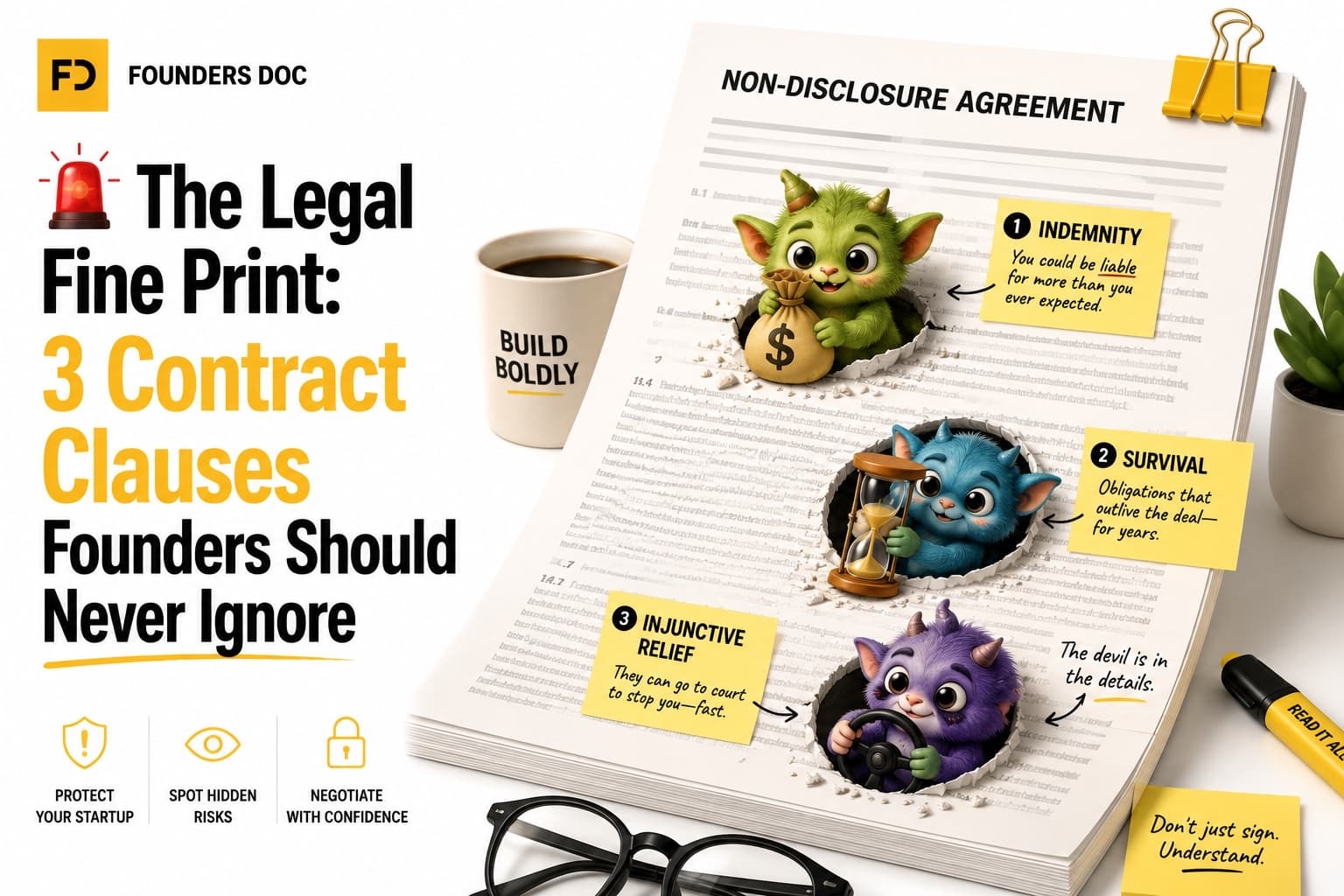
🚨 The Legal Fine Print: 3 Contract Clauses Founders Should Never Ignore
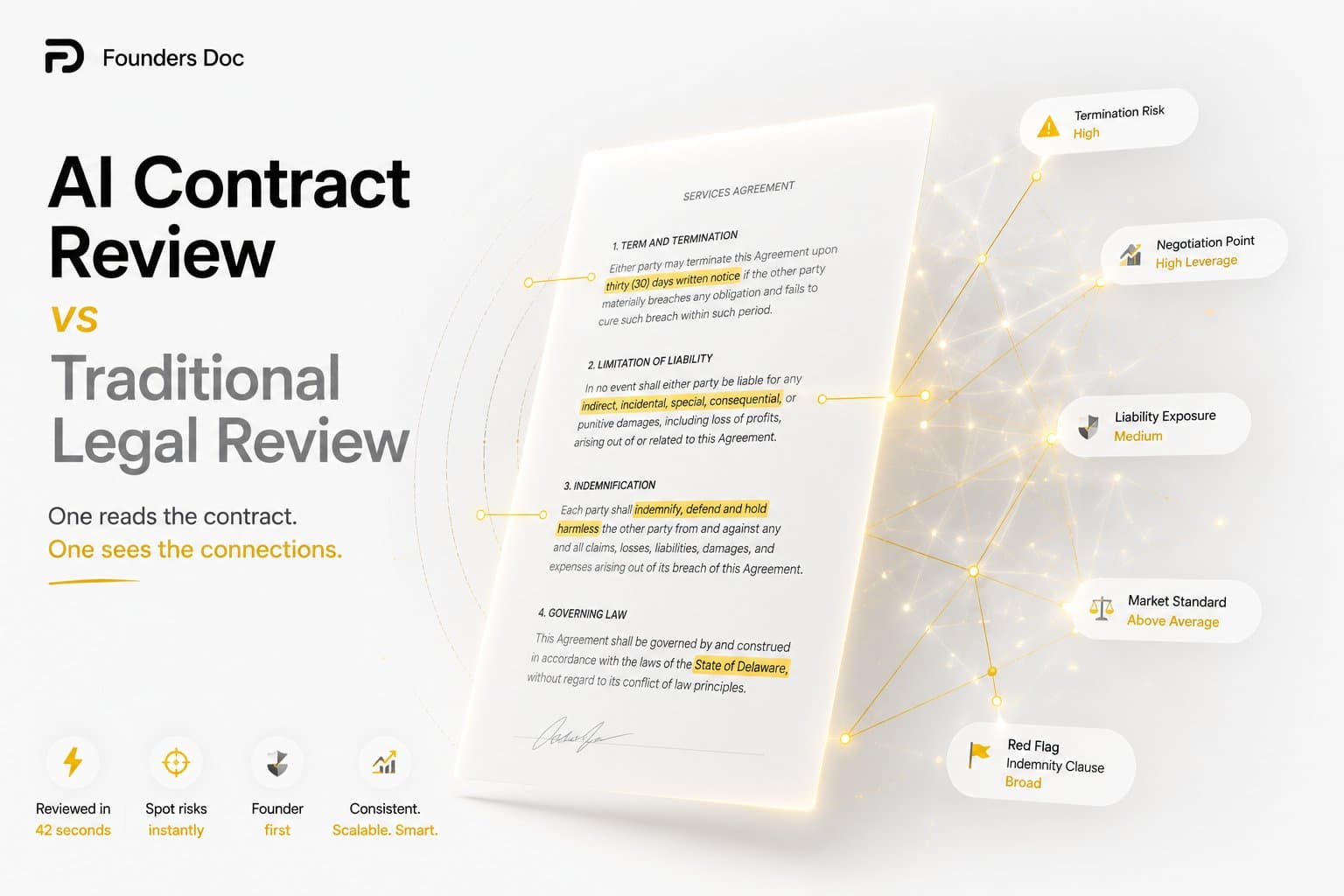
⚖️ AI Contract Review vs Traditional Legal Review: What's the Difference?
🚩 The Hidden Risks in Standard NDAs (And How to Spot Them)
Review your next contract with Jessica.
Know what you’re signing — in minutes, not hours.